An expanded meeting was held at Sana’a University to discuss its pivotal role in development and its status as the country’s premier house of expertise.
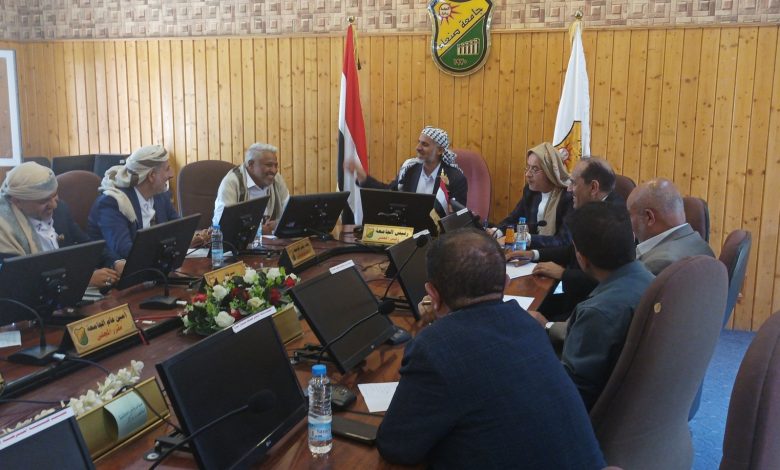
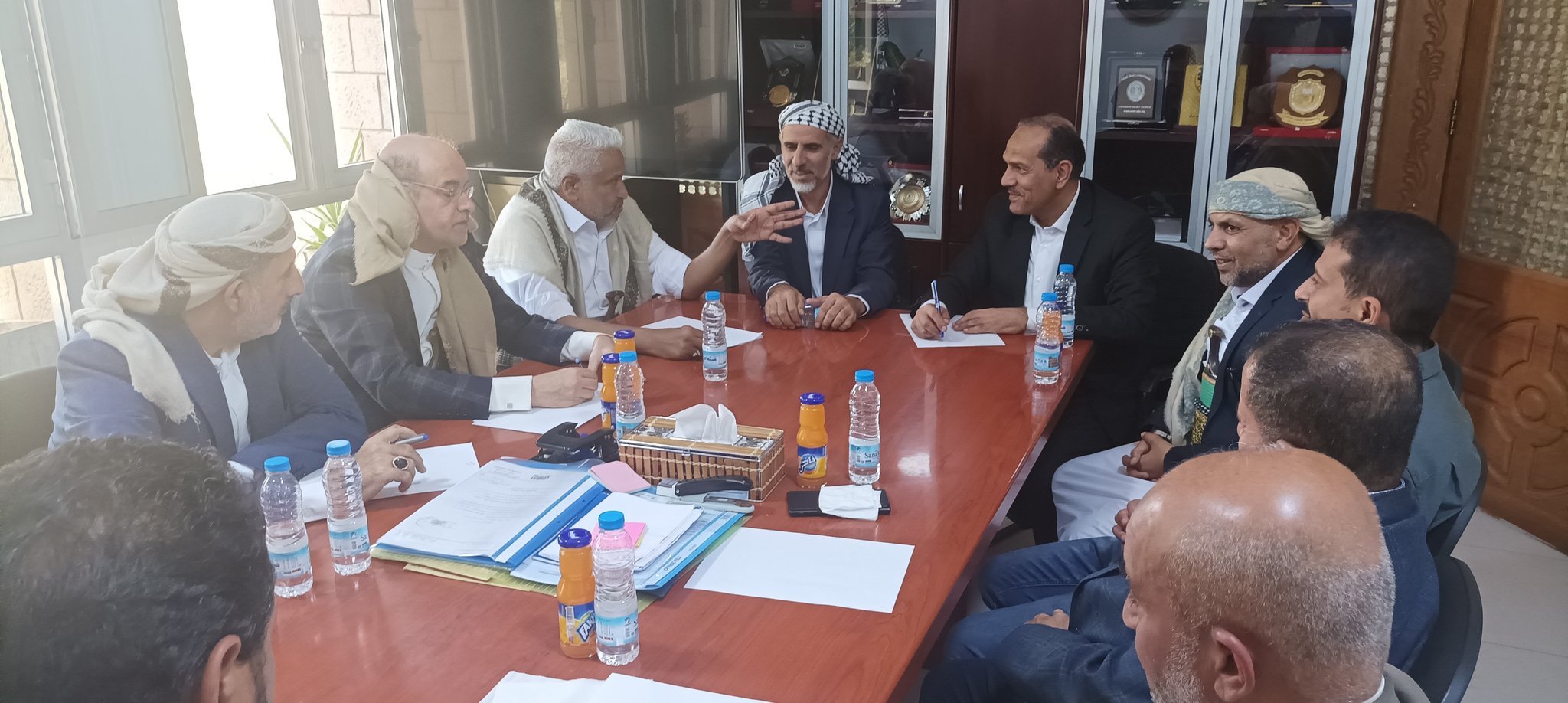
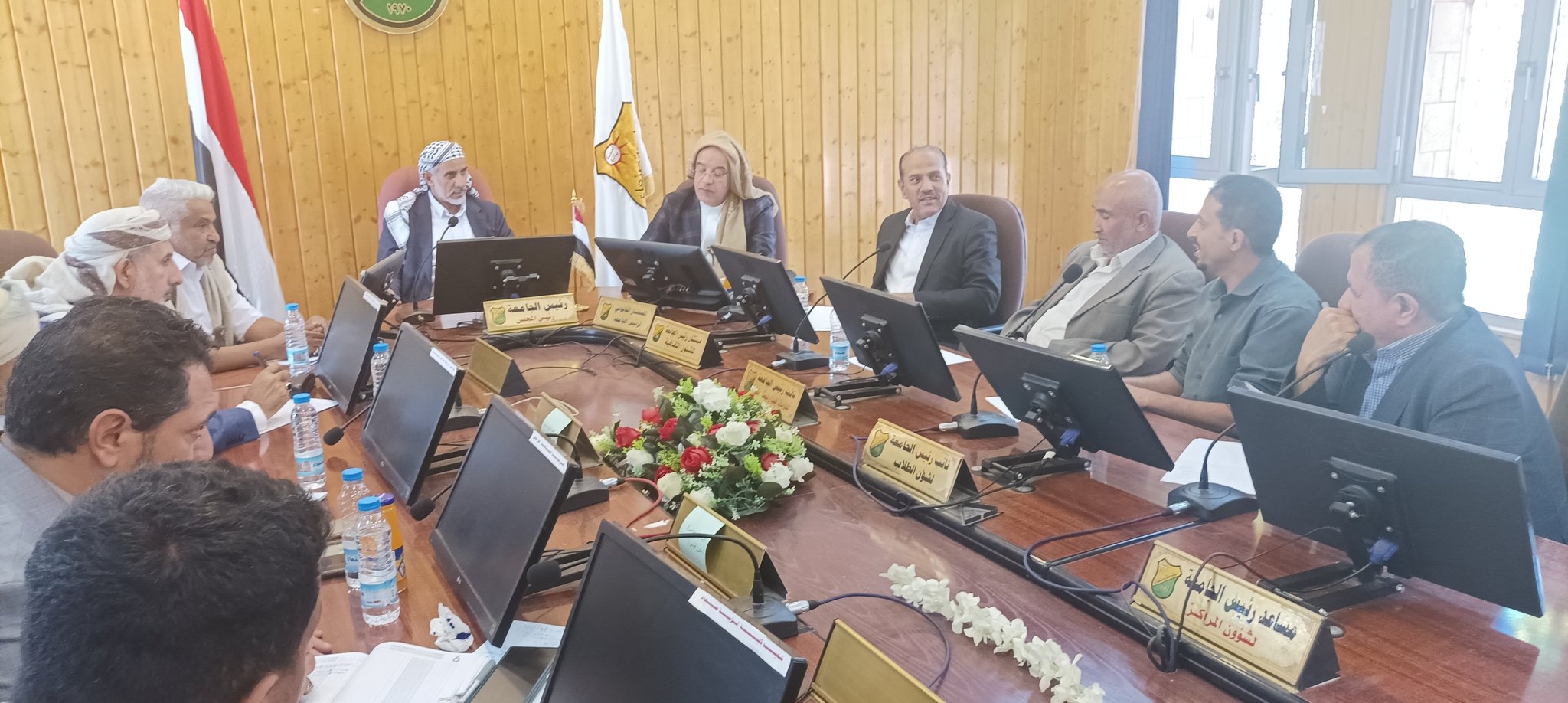
An expanded meeting was held today at Sana’a University, chaired by First Deputy Prime Minister Mohammed Miftah.
The meeting included the Ministers of Economy, Industry, and Investment, Eng. Maeen al-Mahaqri; Transport and Public Works, Mohammed Qahim; Oil and Minerals, Dr. Abdullah al-Amir; and Sana’a University President, Dr. Mohammed al-Bukhaiti.
The meeting was devoted to discussing the importance of Sana’a University’s role in serving society and development, emphasizing the importance of utilizing the university’s scientific, research, technical, industrial, economic, legal, administrative, agricultural, and humanitarian cadres, expertise, and competencies to find appropriate solutions to the requirements of development, the national economy, and local production and manufacturing.
The meeting affirmed that Sana’a University, with its colleges, scientific and research centers, hundreds of academic and humanities programs, hundreds of graduate programs (Master’s and PhD), and dozens of research centers covering all aspects of science and knowledge, is qualified to be the first and largest Yemeni university in a unified Yemen and the premier house of expertise for the government of change and construction.
It also affirms the university’s role in serving society in an organized and institutional manner. The meeting also mandated all ministries, institutions, agencies, and government companies to cooperate and integrate with the university and treat it as a true house of expertise.
This creates a scientific and practical environment that contributes to providing state institutions with creative and qualified academic minds possessing scientific competence and productive energy.
The meeting also discussed the importance of the Government of Change and Construction’s direction and guidance to all productive, economic, industrial, medical, pharmaceutical, and service institutions. This should include providing field training opportunities for Sana’a University students and graduates in various scientific disciplines, supporting them, and maximizing the use of their ideas and scientific, technical, research, and service graduation projects to increase and enhance production efficiency.
This should also create true integration between colleges, scientific research, and service centers, and the requirements and needs of production lines, manufacturing, construction, building, and development in general. The meeting was attended by the Chairman of the General Roads Corporation, the Director of the Engineering Consulting Center, and a number of academic experts in various research, consulting, and engineering fields at Sana’a University.