Completion of the “Integrated Administrative Skills” Training Program for Ministers’ Office Directors and Their Assistants in Sana’a
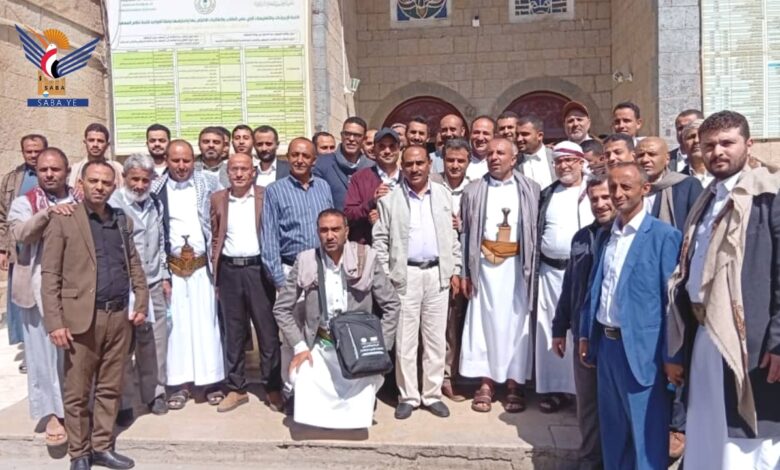
The “Integrated Administrative Skills” training program for ministers’ office directors and their assistants, organized by the Ministry of Civil Service and Administrative Development at the National Institute of Administrative Sciences, concluded today in Sana’a.
The program, part of the first phase of training for administrative leaders, aimed to equip 40 trainees—ministers’ office directors and their assistants—with knowledge and skills in preparing administrative documents, writing and monitoring minutes, drafting letters and reports, conducting administrative meetings, and summarizing effectively.
At the closing ceremony, the Minister of Civil Service and Administrative Development, Dr. Khaled Al-Hawali, emphasized that the Ministry, in accordance with the leadership’s directives, prioritizes training as a cornerstone of administrative development and a crucial factor in improving work, institutional performance, and digital transformation. He explained that the training program targets directors of ministers’ offices and their assistants, as they represent the true face of the institution. He noted that a series of training programs will be implemented in the coming period, each program including multiple training modules in various fields such as public administration, e-government, human resources management, and others.
At the closing ceremony, which was attended by members of the House of Representatives, Ali Hussein, and the Shura Council, Salman Awfan, as well as the Deputy Assistant for Planning, Ali Al-Mutamayez, and the Undersecretary for Training and Evaluation at the Ministry of Civil Service, Al-Azzi Al-Hattami, he emphasized the importance of the program in improving the performance of the offices, which will positively impact the ministry’s overall performance.
Minister Al-Hawali considered training and administrative development a crucial front in resilience, requiring sincerity, integrity, and a strong sense of responsibility. He emphasized that the Ministry is working to establish a robust training infrastructure, based on its assigned role and informed by strategic planning and needs assessment. This initiative aims to link career paths with training programs, thereby enhancing employee efficiency and improving the performance of state institutions.
For his part, Dr. Mohammed Al-Qatabari, Dean of the National Institute of Administrative Sciences, expressed his hope that the trainees would benefit from the program’s outcomes and acquire the administrative skills and knowledge necessary to apply them in their workplaces. This, he said, would enable them to achieve the desired goals of improving work processes, enhancing performance, streamlining procedures, and providing high-quality services to citizens. He expressed his hope that the trainees’ performance in their duties would reflect the state’s directives and elevate performance to the leadership’s aspirations and the demands placed on everyone to be diligent in their offices. He commended the state leadership and the Ministry of Civil Service for their attention to training, which has restored the institute’s leading role in developing and qualifying human resources within public service units.
In his address on behalf of the participants, Jamal Al-Alawi praised the efforts that contributed to preparing and implementing the training program, which enhanced their understanding and skills in all aspects of administrative work for directors of ministry offices and their assistants.
He affirmed that the trainees would strive to apply the experiences and knowledge they gained during the training program in their practical work, thereby contributing to improved performance and increased efficiency in ministries and state institutions.