Martyr President Saleh al-Sammad: A Man of Responsibility and Humanity
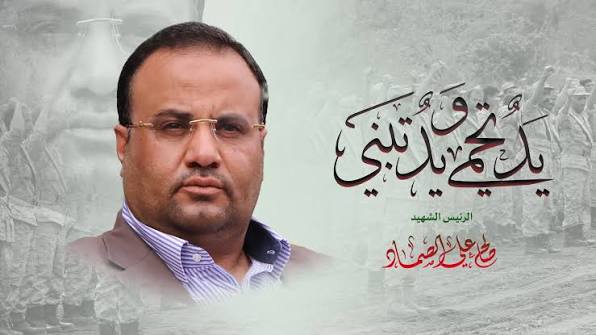
Amidst immense challenges and extremely complex circumstances, the martyred President Saleh Ali al-Sammad emerged as an exceptional figure, shouldering the responsibility of leading the nation through one of the darkest and most difficult periods in Yemen’s modern history.
The martyred president was not merely a political or military leader; he truly embodied the model of a “man of responsibility.” He assumed leadership of the country at a time when many shirked responsibility, not out of greed for money, power, or prestige, but out of a profound sense of the nation’s need for someone to take the reins and guide it toward safety, stability, and peace.
Following the launch of the US-Saudi-Emirati coalition’s aggression against Yemen on March 26, 2015, and the catastrophic repercussions it wrought on all aspects of life, the martyred al-Sammad exerted extraordinary efforts to overcome the challenges, foremost among them unifying the national ranks and strengthening the cohesion of the home front to confront the aggression and the blockade.
Martyr al-Samad assumed the presidency of the Supreme Political Council during an exceptional period, when the aggression and blockade were at their peak. Yet, through his wisdom and courage, he was able to heal the wounds, unify the fragmented military, security, and economic fronts, and mobilize energies and efforts to confront the enemy on all fronts.
He managed the affairs of state with the vision of an inspiring political and military leader, combining the requirements of defending the homeland and strengthening independence through developing military and security capabilities, with a focus on advancing the agricultural and industrial sectors. He also formulated strategic plans for managing state institutions and alleviating the suffering of citizens under these exceptional circumstances.
Martyr al-Samad was the president of all Yemenis without exception. His humility and simplicity embodied the model of an ascetic leader who chose the path of jihad and sacrifice in defense of his homeland and nation, rejecting worldly pleasures. He drew inspiration from the culture of the Holy Quran and the values of struggle, which earned him the love and respect of the Yemeni people, who mourned his loss. During his time in office, his focus was on serving the nation and its people, placing Yemen’s interests above all else, rejecting all temptations offered to him, thus embodying his commitment to national principles and the values of sacrifice and selflessness.
A month before his martyrdom, specifically in March 2018, the martyred president launched an ambitious national project under the slogan “One hand protects… and the other builds,” a roadmap for building a modern Yemeni state based on justice, equality, and institutional work, and strengthening resilience in the face of aggression.
Martyr al-Sammad understood that any project to build a strong Yemeni state would be vulnerable to targeting and conspiracies. Nevertheless, he steadily pursued the project, emphasizing this in his speech at its launch when he said, “As we launch this project, we know the road is long and fraught with challenges, especially in light of the aggression. But just as we rose to the challenge on the battlefronts, we will rise to the challenge on the path of building the state.”
The martyred president summarized the battle to defend Yemen and build the state in two fundamental pillars: first, protecting the land, honor, and national sovereignty, and repelling invaders and aggressors on all fronts; and second, building a truly sovereign state based on an institutional system governed by national laws that reflect the will of the people.
No sooner had this national project been launched than the targeting operations by the American-Saudi enemy escalated. The name of the martyred President Saleh al-Sammad was placed on the list of targets, and financial rewards were offered for information leading to his capture
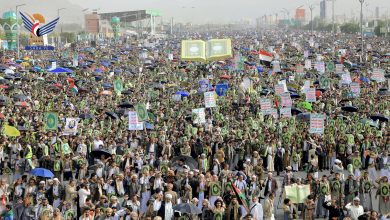
. This was a repetition of the political assassinations that had previously targeted prominent national figures, including President Ibrahim al-Hamdi. On the seventh anniversary of his martyrdom, Yemenis recall the stances of the martyred President Saleh al-Sammad in strengthening resilience, making sacrifices, and confronting conspiracies, stressing that the enemy has reaped nothing but failure and defeats from its aggression.
Martyr al-Sammad understood that any project to build a strong Yemeni state would be vulnerable to targeting and conspiracies. Nevertheless, he steadily pursued the project, emphasizing this in his speech at its launch when he said, “As we launch this project, we know the road is long and fraught with challenges, especially in light of the aggression. But just as we rose to the challenge on the battlefronts, we will rise to the challenge on the path of building the state.”
The martyred president summarized the battle to defend Yemen and build the state in two fundamental pillars: first, protecting the land, honor, and national sovereignty, and repelling invaders and aggressors on all fronts; and second, building a truly sovereign state based on an institutional system governed by national laws that reflect the will of the people.
No sooner had this national project been launched than the targeting operations by the American-Saudi enemy escalated. The name of the martyred President Saleh al-Sammad was placed on the list of targets, and financial rewards were offered for information leading to his capture. This was a repetition of the political assassinations that had previously targeted prominent national figures, including President Ibrahim al-Hamdi. On the seventh anniversary of his martyrdom, Yemenis recall the stances of the martyred President Saleh al-Sammad in strengthening resilience, making sacrifices, and confronting conspiracies, stressing that the enemy has reaped nothing but failure and defeats from its aggression.