On International Civil Aviation Day, Yemen Issues Urgent Appeal to Lift the Blockade on Sana’a Airport
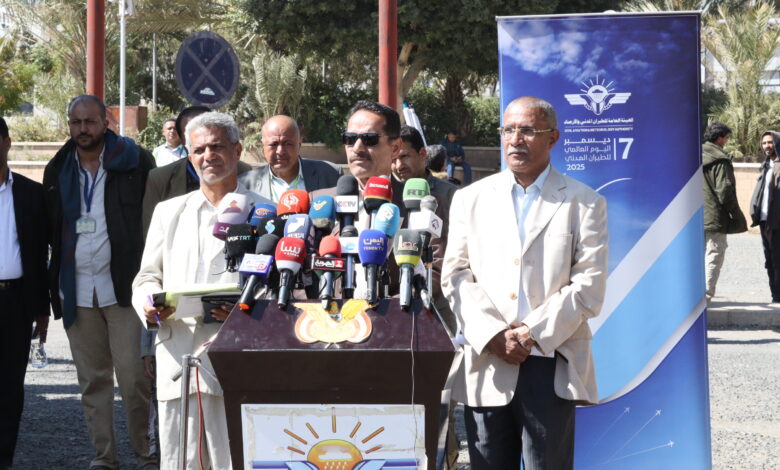
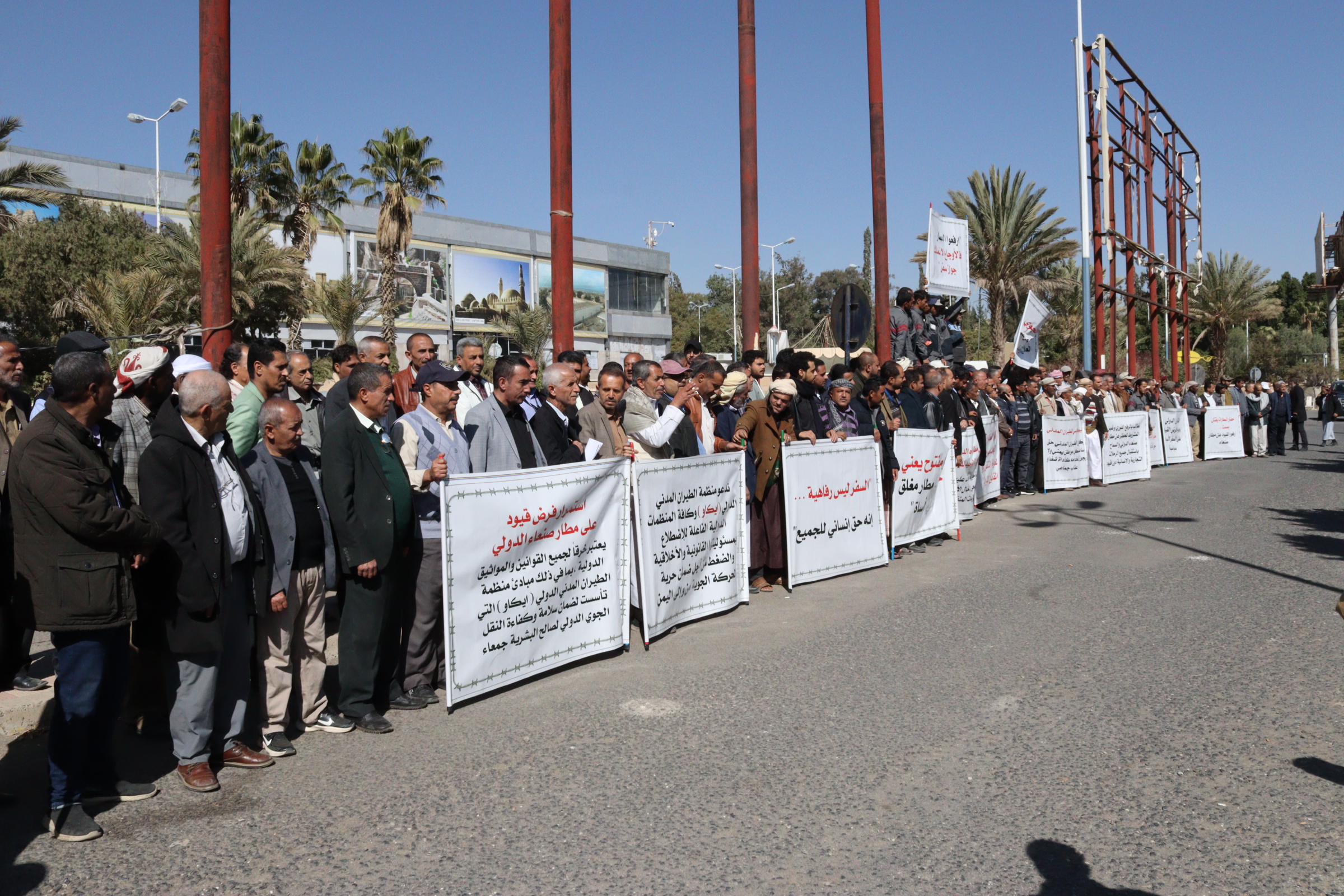
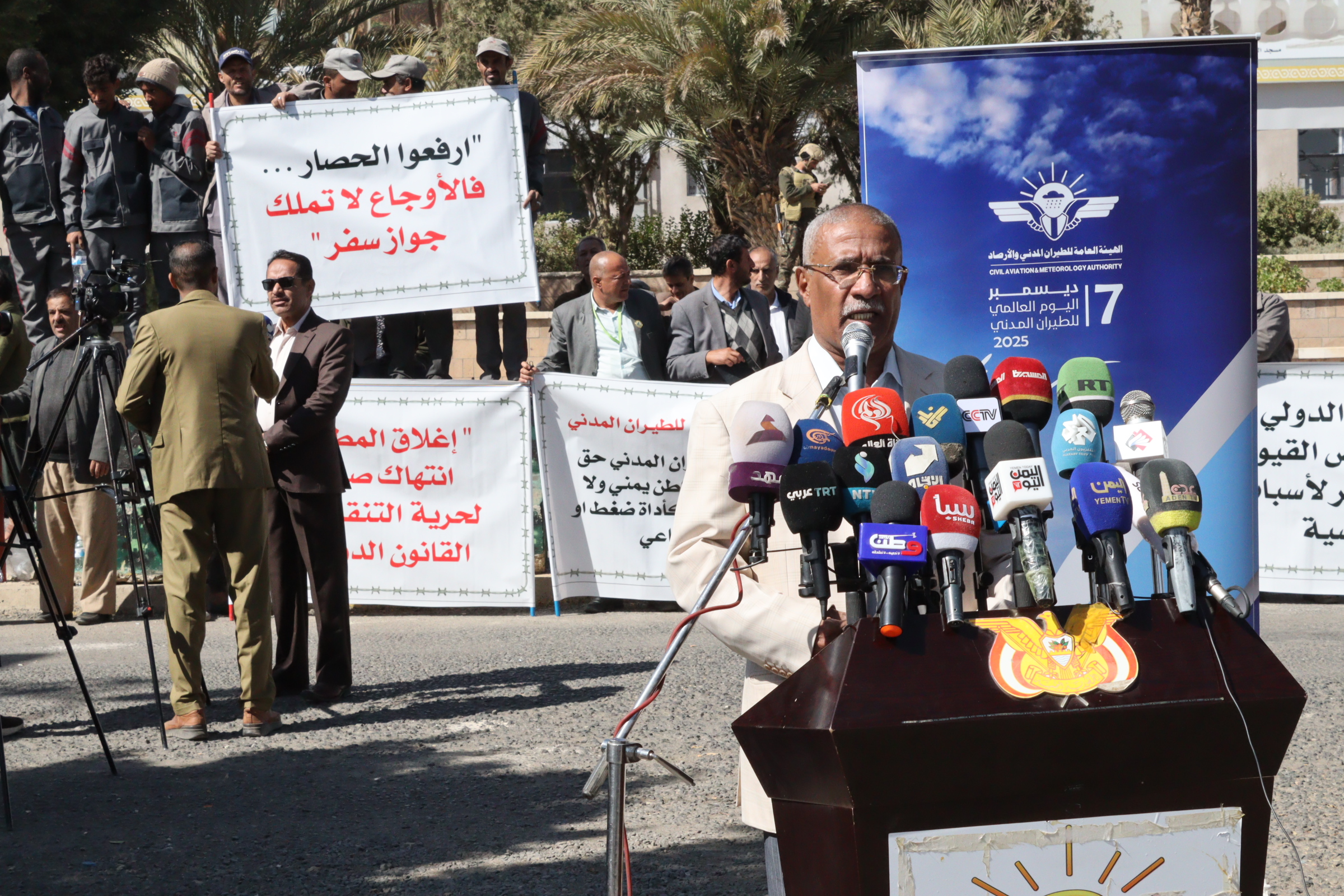
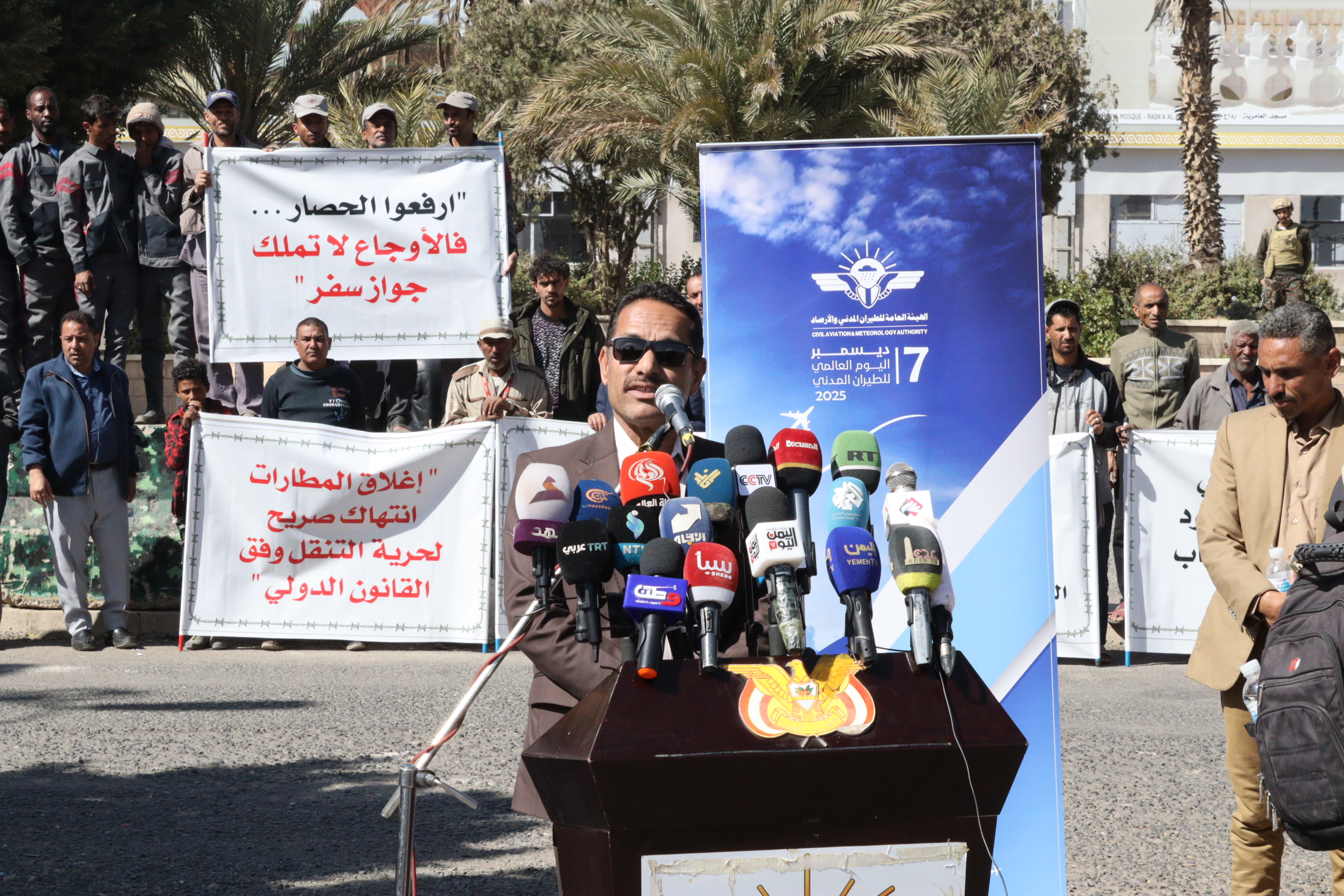
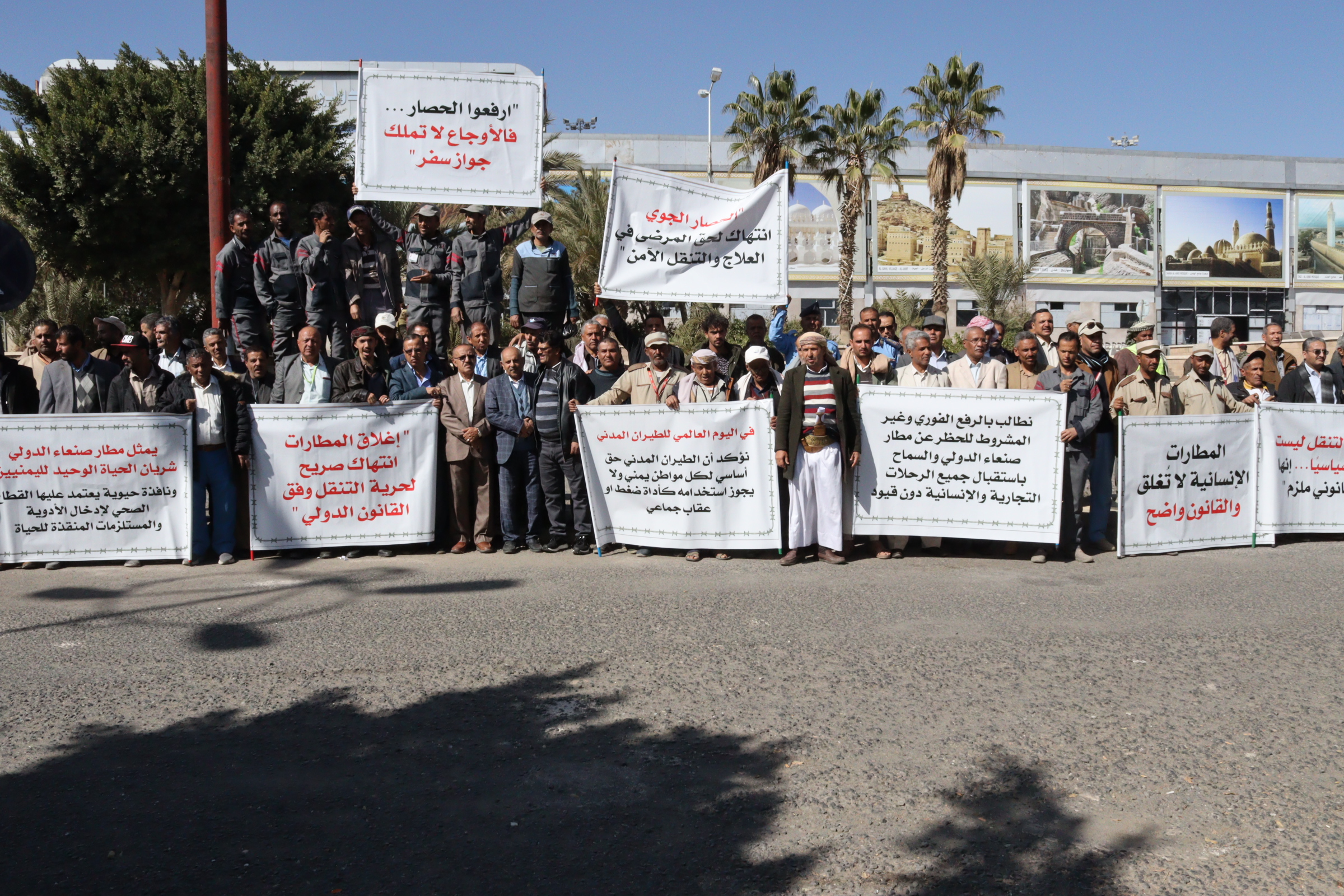
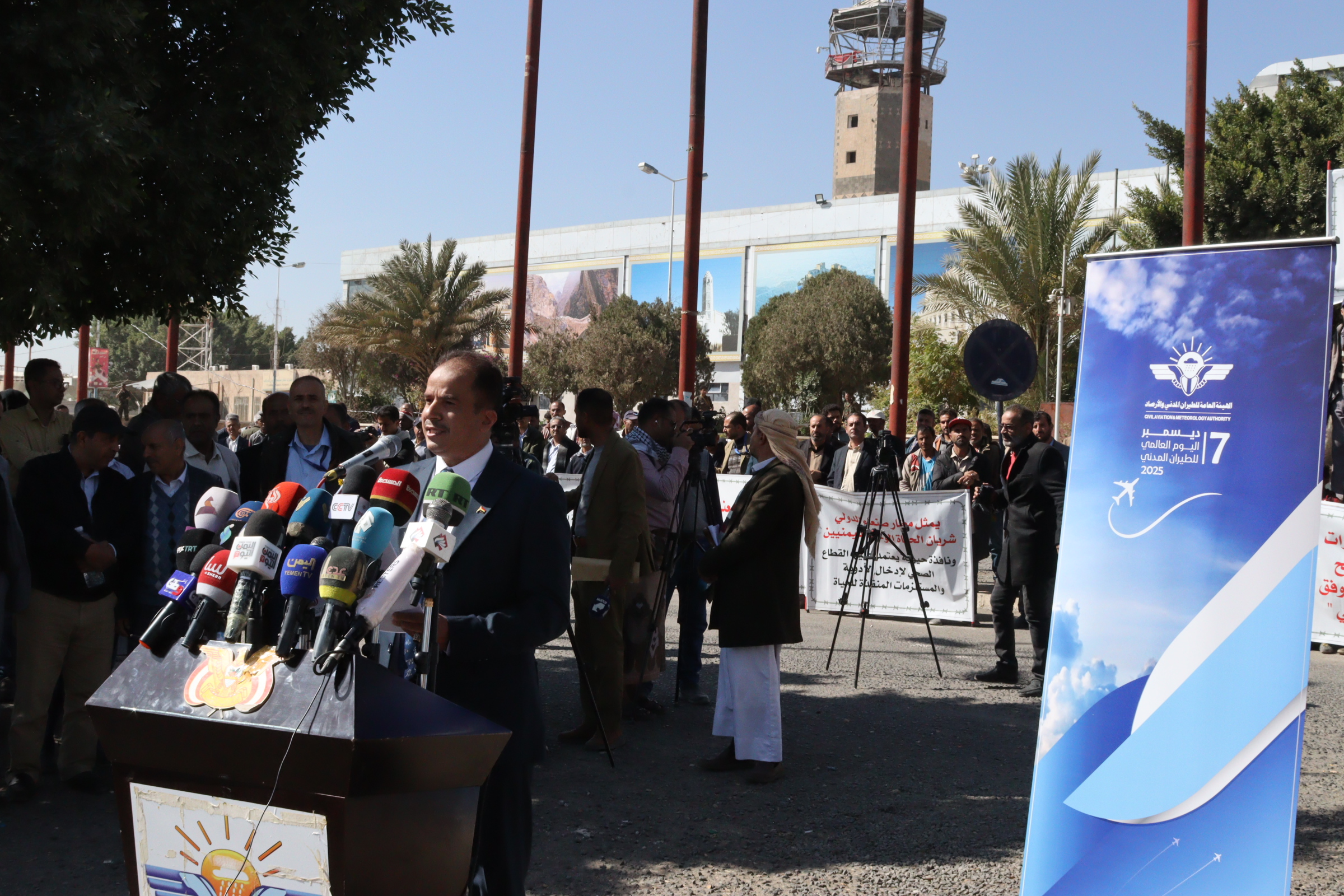
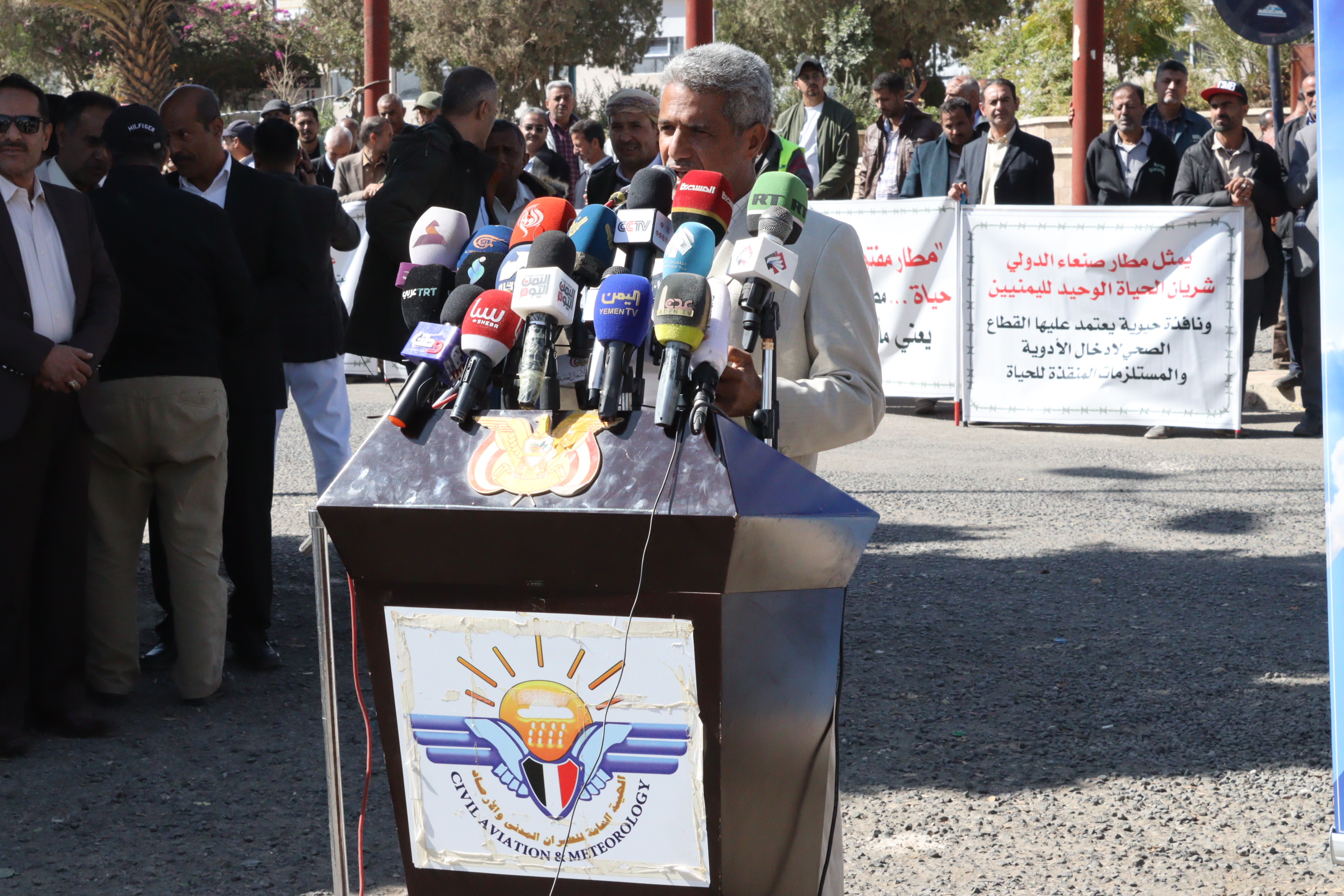
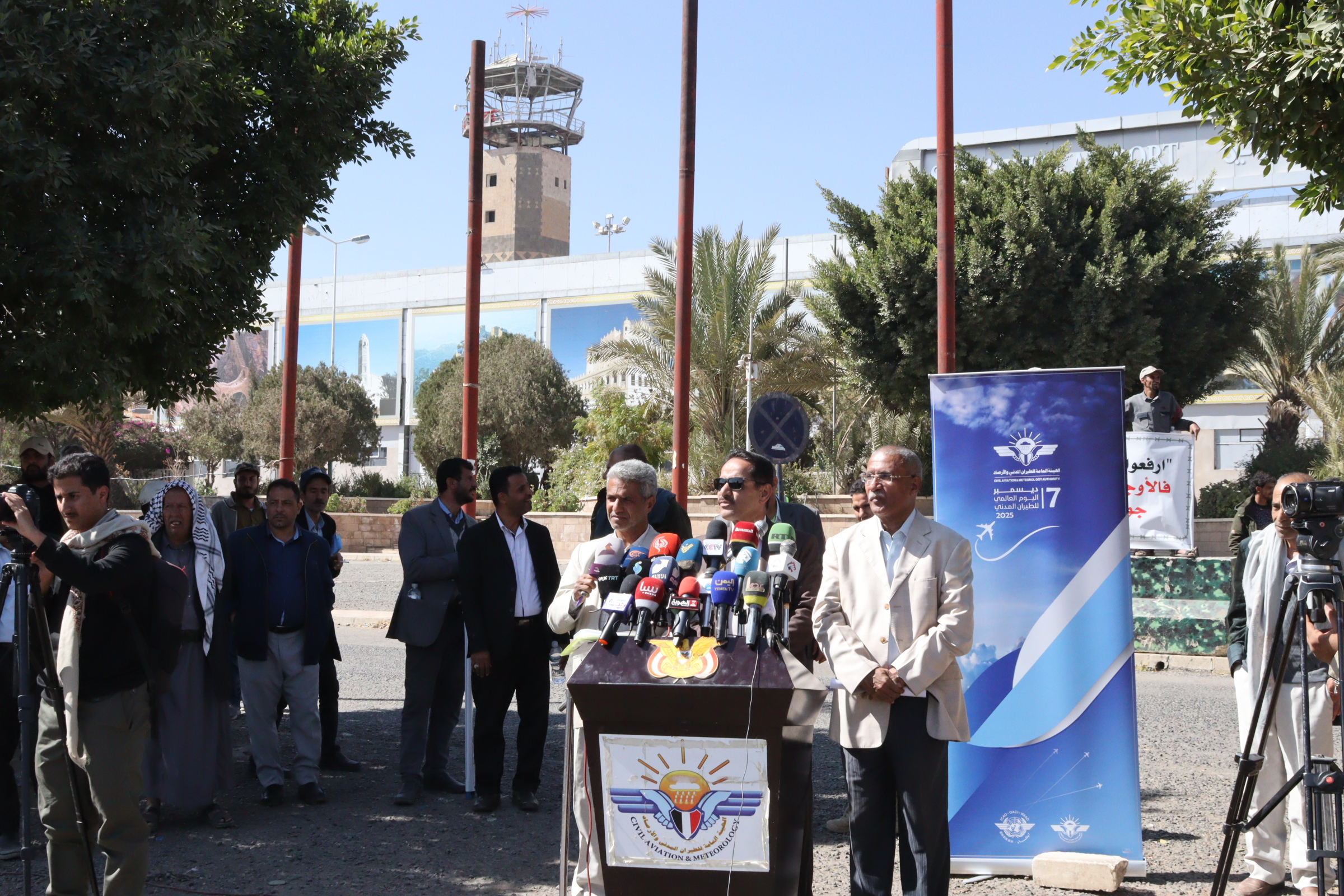
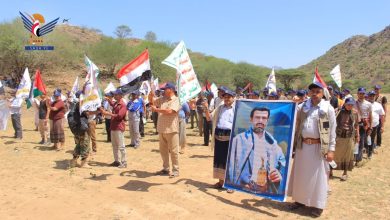
The Republic of Yemen commemorated International Civil Aviation Day with a protest and press conference at Sana’a International Airport, organized by the General Authority of Civil Aviation and Meteorology, the National Human Rights Commission, and the Ministry of Health and Environment. Participants in the protest and conference, including the head of the National Human Rights Commission, Ali Taysir, the acting head of the General Authority of Civil Aviation and Meteorology, Arif Musleh, and the acting chairman of the board of Yemen Airways, Khalil Jahaf, highlighted the scale of the humanitarian tragedy resulting from the continued closure of Sana’a Airport for the tenth consecutive year.
They emphasized that the blockade imposed on the airport constitutes a “crime that does not expire with time,” a flagrant violation of international conventions, and one of the most serious humanitarian crises claiming the lives of Yemenis daily.
During the rally and conference, the head of the National Human Rights Commission affirmed that the closure of Sana’a International Airport since the start of the aggression on March 26, 2015, constitutes a “war crime and a crime against humanity,” noting that the airport served approximately 2.5 million passengers annually, in addition to 800,000 passengers through Hodeidah International Airport before it was targeted.
Taysir explained that the blockade has caused the deaths of over 1.5 million patients due to the prevention of medicines and medical supplies from entering the country, while another 125,000 patients died because they were unable to travel abroad for treatment. He added that there are 250,000 critical cases in urgent need of travel.
He pointed out that the Yemeni people have effectively become trapped in a “large prison,” deprived of their most basic human rights.
The head of the authority stated that while the world celebrates the Chicago Convention, which established principles of peace and cooperation, the Yemeni people alone are denied their right to freedom of movement. He called on the International Civil Aviation Organization (ICAO) to uphold its legal and moral responsibilities towards one of its oldest member states.
Meanwhile, Khaled al-Shaif, director of Sana’a International Airport, explained that the ministries and institutions participating today represent the sectors most affected by the airport’s closure. He emphasized that the airport has remained completely closed despite its full technical readiness.
He pointed out that the world is celebrating civil aviation achievements today, while not a single Yemeni is allowed to travel through his country’s airport, at a time when more than 13 million people travel daily through airports worldwide. He revealed that 15 patients die daily due to the imposed restrictions, considering the airport closure a “fully-fledged crime that cannot be forgotten.”
Al-Shaif noted that Yemen has been a member of the International Civil Aviation Organization (ICAO) since 1964, which grants it clear rights to air sovereignty, freedom of overflight, and operation, all of which are being denied today in violation of international law.
He reiterated that Sana’a Airport is “fully ready and there is no technical justification for keeping it closed,” calling on ICAO and relevant international organizations to take swift action to reopen the airport without restrictions or conditions.
For his part, Dr. Mazen Ghanem, Director of Air Transport at the Civil Aviation Authority, stated that the world is celebrating the 81st anniversary of the International Civil Aviation Organization (ICAO) under the slogan “Safe Skies, Sustainable Future,” while Yemen is experiencing a completely different reality due to the systematic violations targeting the Yemeni aviation sector and its civilian airports.
He said, “The continued closure of Sana’a Airport represents a direct attack on the right of millions of Yemenis to travel and movement, and a violation of the Chicago Convention and international humanitarian law.” He emphasized that depriving Yemenis of their airspace “is not just closing an airport, but closing a window of life for an entire people.”
Ghanem called on the United Nations, ICAO, and the international community to assume their legal and humanitarian responsibilities, halt all forms of systematic targeting of the Yemeni civil aviation sector, and reopen Sana’a Airport to all airlines without any political restrictions.
Meanwhile, Dr. Anis Al-Asbahi, spokesperson for the Ministry of Health and Environment, confirmed that the health sector is the most affected by the continued closure of Sana’a Airport, noting that thousands of patients lose their lives annually due to being prevented from traveling or from receiving life-saving medications.
He explained that the airport closure disrupted treatment programs that relied on international medical missions, depriving thousands of patients, especially those with cancer, heart disease, liver disease, and kidney failure, of timely treatment.
He said, “The air blockade has exacerbated the health catastrophe in the country, increased the mortality rate, and led to a severe shortage of medicines, reaching 60 percent.” He stressed that reopening Sana’a airport is “an urgent humanitarian necessity to salvage what can still be saved.”
The protest and press conference resulted in a joint statement from the General Authority of Civil Aviation and Meteorology, the National Human Rights Commission, and the Ministry of Health and Environment. The statement, read by the head of the National Human Rights Commission, affirmed that the continued closure of Sana’a Airport constitutes one of the world’s largest invisible humanitarian crises.
It noted that the unjust restrictions have caused the deaths of more than 1.5 million patients, deprived 125,000 of their right to travel for medical treatment, forced thousands of aviation sector employees to stop working, and damaged hundreds of vital sectors linked to air navigation.
The statement called for the immediate and unconditional reopening of Sana’a International Airport, an end to all targeting of Yemeni civilian airports, the reopening of all airports to air traffic, and the resumption of operations by international airlines.
It urged the United Nations, the Security Council, and the International Civil Aviation Organization (ICAO) to intervene urgently to lift the blockade, issue a binding resolution for the reconstruction of Yemeni airports, and form an international fact-finding team to investigate the deliberate targeting of civilian aviation facilities.
The vigil and conference were attended by the Deputy Ministers of Safety at the Civil Aviation Authority, Dr. Abdul Hamid Abu Talib, and Airports, Yahya Al-Kahlani, the Dean of the Institute of Civil Aviation and Meteorology, Dr. Naji Al-Sahmi, and employees of the Authority and its various sectors.