Road Projects in Hodeidah: Achievements that Curb Accidents and Lay the Foundation for a Development Renaissance
Report by: Jamil Al-Qashm
Exceptional construction projects are underway in Hodeidah Governorate, reshaping the development landscape with a clear national vision that prioritizes human protection and fulfilling aspirations. This is part of a strategic plan to transform challenges into opportunities for comprehensive development.
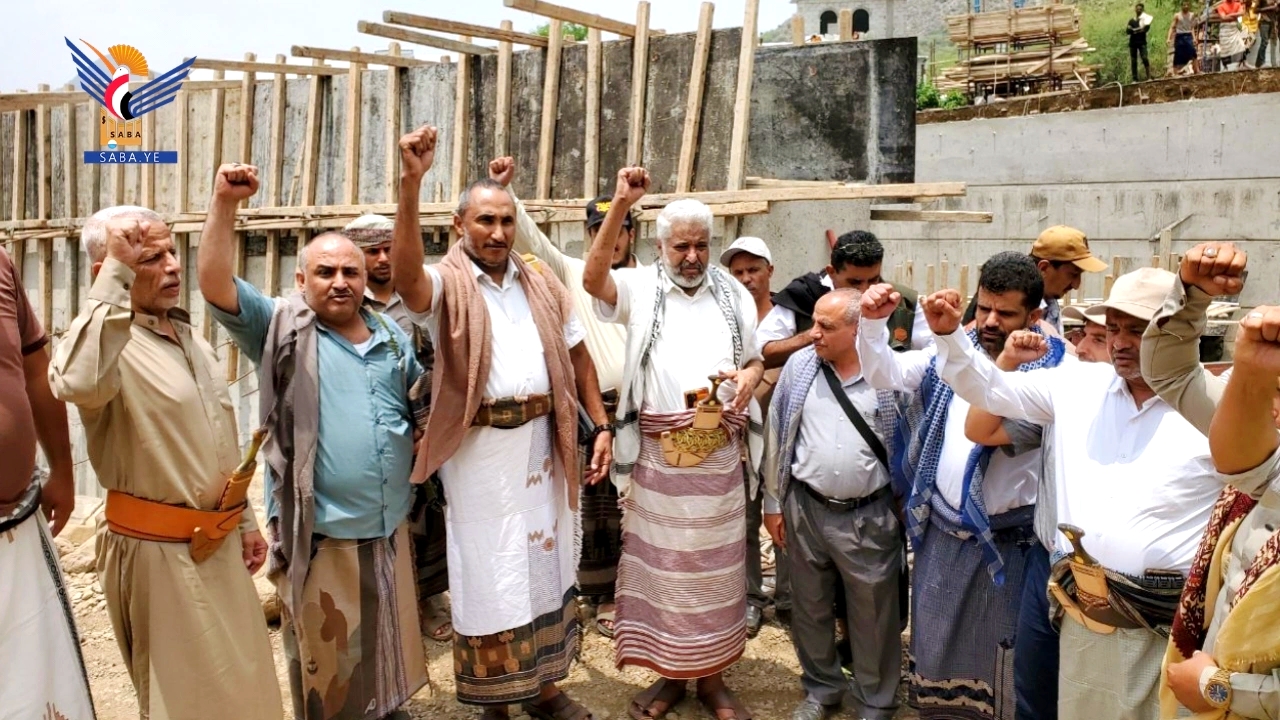
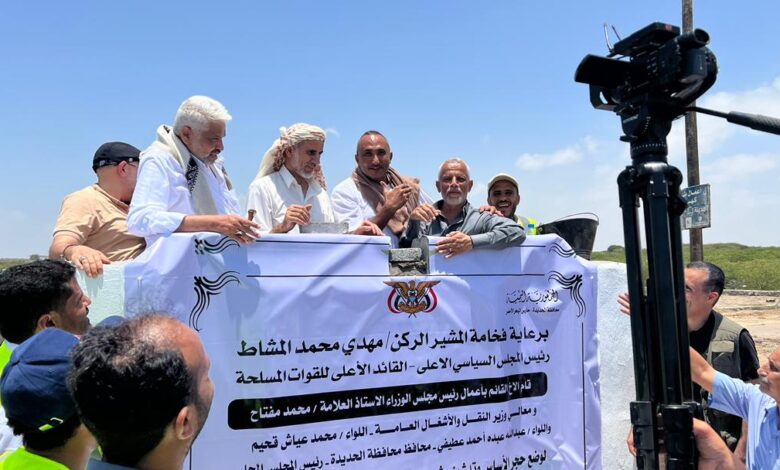
The laying of the foundation stone for the expansion project of the northern entrance to Hodeidah Governorate, specifically the “Al-Sham – Al-Salif” road, comes as a direct response to citizens’ appeals to end a bitter era of tragic traffic accidents that have long claimed lives. These accidents are a result of the narrowness and deterioration of this vital artery due to heavy loads and decades of systematic neglect. The substantial funding allocated to the expansion of the Damascus Road – 2.5 billion riyals and a length of 15 kilometers – reflects the government’s serious commitment to finding effective solutions that ensure passenger safety, keep pace with the rapidly growing maritime activity, and establish a sustainable infrastructure capable of handling the pressure of heavy trucks, which are the lifeblood of supply to all Yemeni governorates.
The project is of paramount importance as it includes paving the second lane of the road, constructing medians, and installing lighting and landscaping networks according to the highest engineering standards. This will give the city’s entrances a more modern appearance and enhance the efficiency of the logistical supply chains connecting the ports to the various governorates.
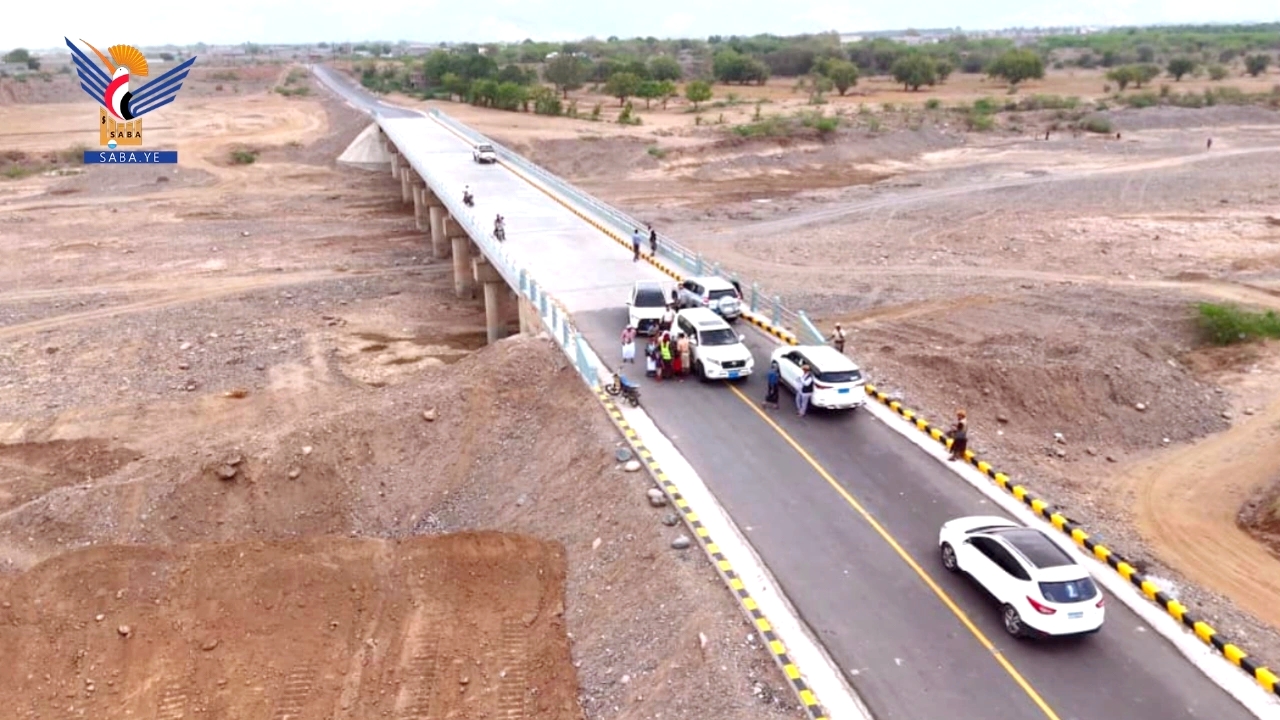
The opening of the strategic Al-Kadan Bridge represents a historic achievement and a true victory over the eras of failure and procrastination that plagued the project for more than 20 years, under regimes that failed to complete it despite the availability of substantial funds and the favorable conditions that preceded the aggression and blockade. The completion of this vital bridge, costing a total of one billion riyals, reflects the strength of the Yemeni will to overcome developmental stagnation. Today, it serves as a major artery connecting the governorates of Hodeidah and Al Mahwit, benefiting thousands of farmers and travelers.
The Al-Kadan Bridge facilitates the movement of agricultural products between the districts of Al-Qanawis and Al-Maghlaf, and the Al-Kadan area in Ad-Dahi, reaching central markets. This reduces transportation costs and stimulates productive activity in the Tihama Plain, which represents Yemen’s primary food basket, a region resilient in the face of challenges.
The agricultural road network connecting the governorate’s districts and Al Mahwit represents a qualitative leap in rural transport infrastructure. It ensures the flow of production inputs and facilitates access to services in remote areas, thereby strengthening social stability and opening up broad prospects for investment in the agricultural and livestock sectors.
These on-the-ground interventions underscore the state’s proactive approach in directing available resources toward high-priority projects that address urgent community needs and rectify the inherited problems of inadequate roads, moving beyond the policies of incompetence and failure that previously hampered development decisions.
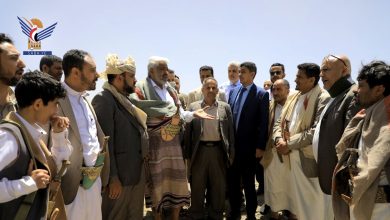
The strong on-the-ground presence of state leadership at the inauguration and launch of these service projects reflects the close relationship between the leadership and the community, and the government’s commitment to direct oversight to ensure that the work is carried out according to approved technical specifications, guaranteeing the sustainability of these vital facilities for future generations. In this context, Acting Prime Minister Allama Muftah, during the inauguration of these projects, considered the on-the-ground transformation taking place in Hodeidah, particularly in its entrances and strategic roads such as the Sham-Salif road, a practical response to the development of road and bridge services and the securing of goods transport. This will alleviate traffic congestion and establish a new phase of construction and logistical development despite the blockade.
For his part, Minister of Transport and Public Works Mohammed Ayash Qahim affirmed that these achievements reflect the directives of the revolutionary leadership and the Supreme Political Council, as well as the Change and Construction Government’s program to address citizens’ service needs and transform legendary resilience into tangible development that breaks the shackles of the unjust blockade.
He explained that the Ministry includes road and bridge projects in Hodeidah Governorate within the state’s development strategy to ensure the continuity of logistical supply chains and connect vital ports to major cities, thus serving economic activity and achieving the highest levels of traffic safety for travelers. Meanwhile, Hodeidah Governor Abdullah Atifi considered the implementation of self-funded service projects, despite the repercussions of the blockade and aggression, a victory comparable to victories on the military fronts. He explained that these projects restore the governorate to its rightful place and end decades of neglect that have plagued its basic infrastructure.
He emphasized the commitment to completing the stalled road and bridge projects, embodying the spirit of change and reconstruction by moving to the fieldwork phase. This phase aims to alleviate the suffering of citizens and establish a solid foundation for achieving sustainable development goals across all districts. This foundation relies on harnessing available resources to overcome current challenges and cultivate a culture of construction and development.
For his part, the head of the Roads Maintenance Fund, Engineer Nabil Al-Haifi, affirmed the Fund’s commitment to prioritizing the repair and expansion of strategic routes that serve as vital arteries for the national economy. He considered addressing traffic congestion at the entrances to governorates a civilized approach that reflects the success of the development strategy in ensuring the safety of travelers. Meanwhile, the head of the Roads and Bridges Corporation, Engineer Abdulrahman Al-Hadrami, explained that the construction process taking place in Hodeidah today breaks the state of historical stagnation and establishes a strong relationship between infrastructure and production, which ensures the sustainability of these logistical routes in the face of the increasing burdens of commercial and maritime activity.
The Director of the Public Works Office in the governorate, Engineer Mohammed Muthanna, emphasized the commitment to technical aspects in implementing vital projects according to precise engineering specifications. This ensures the sustainability of the road network, enhances its efficiency in handling traffic volume, and facilitates the movement of commercial and civilian transport with high levels of safety.
The successful construction of bridges and the paving of dual carriageways with local funding, despite the challenges, demonstrates the efficiency of the Ministry of Transport and Public Works and the local authority in Al Hudaydah Governorate in utilizing available resources to achieve comprehensive development under the most difficult circumstances. This is part of the ongoing process of change and construction aimed at effectively and competently realizing the desired aspirations.
With these projects, Al Hudaydah Governorate is transforming into a hub of activity and a developmental force that reflects future aspirations and embodies the greatness of resilience. Every paved road and every bridge opened confirms that the era of hardship is over and that the dawn of construction and prosperity has broken over the land of Tihama, a land of goodness and beauty, under wise leadership, regardless of the challenges.