Sana’a: Community Initiatives Projects Inspected in Al-Haymah Al-Kharijiyah
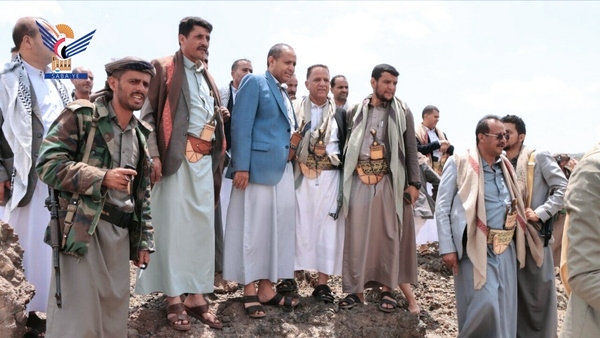
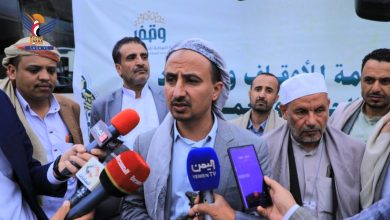
A team from the Project Implementation Follow-up Committee in Sana’a Governorate, headed by the Director of the Governor’s Office, Saddam Al-Fasih, inspected the progress of work on several initiative projects in Al-Haymah Al-Kharijiyah District.
The team, which included the Director of Community Initiatives in the Governorate, Engineer Mohammed Al-Nizari; the Deputy Director of the Governorate’s Health Office, Dr. Mujahid Al-Rumaim; Engineer Abdulrahman Al-Murtada; and the Supervision and Evaluation Officer of the Central Emergency Development Interventions Unit, Engineer Hussam Al-Mikhlafi, reviewed the initiative to implement the Beit Al-Rumaim-Al-Hisn Road Survey and Paving Project, Bani Sulayman District.
This project is being implemented with community contributions, support from the Central Emergency Development Interventions Unit, and the supervision of the Governorate’s Initiatives Department.
The project includes surveying and paving concrete for the road linking Beit Al-Rumaim to several districts in the district and villages in Bani Sulayman District, with a length of two kilometers and 600 meters and a width of four meters. The project is being implemented at a cost of 32 million riyals, of which 12 million riyals are in support of the Central Emergency Development Interventions Unit, and 20 million riyals are in community contributions.
Al-Fasih and Al-Nizari emphasized that the initiative’s implementation comes in response to the directives of the Leader of the Revolution to activate the role of society in participating in the construction and development process alongside the state, particularly projects that contribute to facilitating the movement of community members and alleviating their suffering due to the ruggedness of the road.
They praised the role of the Central Emergency Development Interventions Unit in supporting community initiatives in various districts of the governorate.
They commended the district’s residents’ engagement and awareness of the importance of community initiatives that enhance the role of communities in the local development process.
The district director, Khaled Al-Arshi, and the head of the beneficiaries’ committee, Ahmed Al-Rumaim, indicated that the project will serve more than five thousand citizens in several villages in the Bani Sulayman district and neighboring districts.
They explained that the concrete work completed on the project amounted to two thousand square meters. They commended the governorate’s local authority leadership’s commitment to overcoming difficulties and providing the necessary resources to implement basic service projects and develop infrastructure across all districts of the governorate.
The technical team also inspected a number of water collection tanks in the Bani Dahman area of the Bani Sulayman district, which are being implemented by citizens through their own efforts. The total number of tanks reached 60.
The team’s head and members praised the initiatives, which represent one of the primary methods for conserving rainwater and floodwater for use in irrigating agricultural land, and affirmed their commitment to providing the necessary support for the completion of the tanks.
The team, along with the director of the Health and Environment Office in the Capital Secretariat, Dr. Mutahhar Al-Marouni, and the director of Omrah Hospital, Dr. Muhammad Al-Tahif, inspected the work on the $215,000 rehabilitation project for the September 26 Hospital Authority – Matna, funded by the World Health Organization.
They heard from the head of the authority, Dr. Abdul Nasser Al-Dhari, an explanation of the work completed on the project, explaining that work is being carried out in accordance with technical specifications.
The head of the authority considered the project an important step towards improving services provided to citizens, noting that the rehabilitation process will contribute to raising the efficiency of performance within the authority and providing a safe environment for patients and healthcare workers.
They were accompanied by a number of directors of the executive offices in the directorate and social figures.