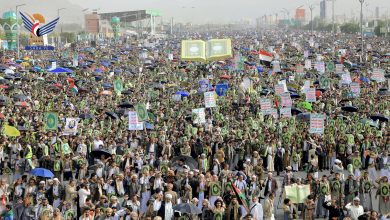
Value Chain Management is a strategic step within the government’s efforts to reduce the import bill and achieve self-sufficiency.
Report: Yahya Jarallah
Given its potential economic results, the Value Chain Management Program is one of the most important strategic projects being implemented by the Government of Change and Construction in an effort to reduce the import bill and achieve self-sufficiency.
This program derives its importance from its connection to the fundamental pillars of the resistance economy, namely production and industrial processes, and the accompanying empowerment and improvement in the living conditions of a broad segment of the rural and urban population, including farmers, marketers, traders, manufacturers, and others who benefit from the resulting job opportunities.
The government’s launch of the Value Chain Management Program comes within an ambitious national vision, given Yemen’s vast and promising potential. This potential can be realized for the country’s citizens if relevant authorities succeed in mobilizing the latent capabilities of both the national economy and local communities.
The revolutionary and political leadership and the government recognize that this process can only be achieved by creating a true and effective partnership with the private sector and society, and by mobilizing all efforts to contribute to the country’s achievement of self-sufficiency and self-reliance.
Therefore, the government seeks to give a stronger and more influential dimension to the economic aspect in the coming stages, in line with the nature of the current challenges and in light of the disastrous repercussions resulting from ten years of aggression and blockade.
Within its overall program, the Government of Change and Construction has been keen to consider the community economy as the primary driver of development and economic construction. This has resulted in the stimulus program as an economic program for the next five years.
Here, the Ministry of Administration and Local and Rural Development plays a pivotal role through its networking and coordination of the efforts of various relevant government agencies, local authority bodies, and the community, in addition to its vital role in mobilizing, stimulating, and organizing community efforts.
Based on this role, the Ministry’s leadership places great emphasis on activating the role of local authorities in stimulating community engagement, focusing on economic and social aspects, and mobilizing community potential, energies, and capabilities with the goal of achieving local and rural development.
The Value Chain Management Program was built on the foundations of the resistance economy and the service economy, taking into account factors for its success by activating underutilized capabilities within the national economy, while taking into account the country’s conditions and the aggression and blockade it is facing.
Therefore, many experts consider value chain management to be one of the best and most successful means of resilience in the face of the crises and difficult economic conditions facing Yemen.
In its initial stages, the program focuses on more than 42 types of local agricultural goods and raw materials to stimulate them in the industrial sector. This program constitutes one of the broad themes of the Government of Change and Construction, given the annual import bill of up to $15 billion.
The Value Chain Management Program stems from the Economic Empowerment Project, part of the government’s economic stimulus program, which included the issuance of a new investment law. The law, along with the empowerment program and its various other programs, most notably value chain management, contributes to a tangible economic impact.
In this context, the National Committee for Economic Empowerment was also formed, chaired by Deputy Prime Minister and Minister of Administration, Local and Rural Development, Mohammed Al-Madani.
The committee has begun making strong strides in implementing stimulus programs based on value chains and import bill management.
Within the value chain framework, eight major programs and projects have been approved. The first supports the textile industry, a promising sector that employs a large workforce.
This is achieved by exempting all businesses and establishments related to this sector, including factories and plants, from all taxes and other fees. This will contribute to achieving high economic empowerment, starting with cotton production and establishing ginning mills and factories.
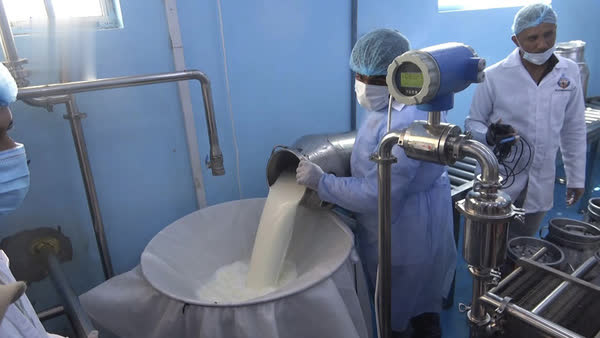
The second chain is represented by the dairy industry, which will witness significant development to include all agricultural areas such as the Al-Bun, Jahran, Rasaba, the Haql Bayrim, Kitab, and Al-Sahoul areas in Ibb, all the way to Al-Qaida and Al-Hawban in Taiz. This will focus on infrastructure such as small and medium-sized collection centers and refrigerated transportation before reaching the distribution process, which will achieve higher product specifications.
The third chain involves the production of a range of food products based on local agricultural raw materials, including halva, especially after the success of white sesame cultivation in Yemen.
The fourth chain involves the production of juices through concentrate production plants, an important step toward resolving many problems, particularly during the agricultural season and the resulting decline in some agricultural products.
The value chains also include the encouragement and development of small and micro-industries, as well as the leather industry, which Yemen possesses the potential to advance, given the availability of adequate quantities of leather within the country. Raw materials for leather industries are exported.
As an extension of this, attention is focused on supporting and protecting local products, enabling them to expand their existing projects and enhance the quality of their products, which have proven to be highly competitive and constitute a suitable alternative to similar imported goods.
In this context, the Ministries of Economy and Industry and Investment and Finance play a pivotal role in implementing policies to localize and protect local products and ease restrictions on the private sector, which is the cornerstone and primary partner in achieving the desired economic growth.
The Investment Law represents a qualitative addition to this process, as it introduces a new vision in the state’s thinking, supported and nurtured by the revolutionary and political leadership. This opens broad horizons for national capital in both the public and private sectors to engage in investment projects with unprecedented incentives and full guarantees.
It provides full support for national industries and high protection for local products, with the aim of advancing the industrial sector through value chain management and reducing the import bill.
The strategy to support national industries and protect local products includes encouraging food industries to shift toward the use of local raw materials, contributing to the creation of productive industrial activity that supports and develops investments in agriculture and livestock, taking advantage of the advantages, facilities, and incentives offered by the new Investment Law.
The Government of Change and Construction approved the Economic Stimulus Program, which includes several tracks and objectives, most notably the localization of industries and the protection of local products. This program aims to achieve a significant increase in job opportunities, reduce unemployment, and provide high-quality national products at competitive prices.
This is in conjunction with the study and issuance of decisions to protect and localize a number of new goods in support of local industries. In an effort to develop the production capacities of local factories and protect their products, the government has adopted carefully considered steps and measures, including decisions to protect national products, enhance consumer confidence, and create a genuine partnership between the government and the private sector in this regard, as this is the key to achieving the desired economic goals.