Al Hodeidah: Service Projects Establish a Comprehensive Development Transformation in the Northern Directorates
Report: Jamil Al-Qashm
The northern directorates of Al Hodeidah Governorate are witnessing a development movement encompassing vital sectors. This is part of the local authority’s efforts to implement direct projects and interventions aimed at improving the conditions of roads, health, and education, and expanding the scope of services in coastal neighborhoods and areas.
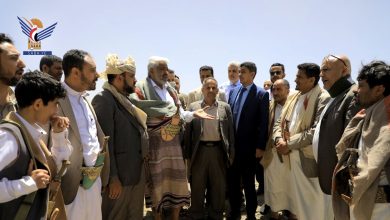
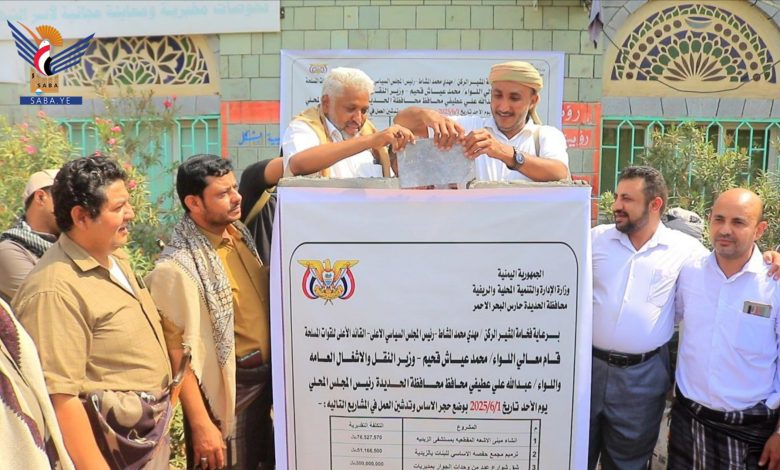
More than 1.713 billion riyals have been allocated to finance a package of projects that were inaugurated and the foundation stone laid yesterday. These projects range from completing phases of strategic roads, flood protection works, inaugurating health buildings, and renovating educational facilities, in addition to urban planning and road construction projects.
The road linking Al Qanawis, Al Maghlaf, and Al Kadan has become a prominent feature of this movement. The first phase of the asphalting project has been completed, and work has begun on the second phase. This project aims to reconnect the areas, shorten distances to services, reduce transportation costs, and enhance local market activity, particularly in agricultural areas.
In addition to this project, the expanded Al Jilaniah culvert in Al Qanawis and the surface bridge currently being built in Al Dhahi represent effective responses to the challenges of recurring flooding during the rainy season.
These projects provide sustainable protection, secure vital traffic routes, and prevent road closures between districts.
In Al Zaydiyah, health services are regaining their presence with the laying of the foundation stone for a CT scan building within the district hospital. Meanwhile, the Hafsa Educational Complex is undergoing rehabilitation work to restore its educational function in a more suitable environment, with standards that meet the needs of female students, support academic achievement, and encourage regular study. The projects were not limited to the central districts, but extended to neighboring through road construction and neighborhood expansion. This contributed to regulating urban expansion, facilitating service provision, and improving the infrastructure of growing residential areas experiencing population growth.
The Governor of Hodeidah, Abdullah Atifi, considered the service interventions taking place in the northern districts to be the culmination of continuous efforts by the local authorities to bridge the service gap that has plagued these areas for years. He emphasized that these projects are beginning to make a tangible difference in the lives of citizens and restore confidence in the development process.
Atifi explained that what has been achieved on the ground did not come about by chance, but rather was the result of prior planning and based on a real database of the needs of the most deficient districts. He praised the role of the Road Maintenance Fund in financing several projects and the community efforts that contributed to accelerating the pace of completion.
He emphasized that the projects currently being implemented represent a true shift from ad hoc responses to stable institutional spending, and from temporary solutions to radical solutions.
They establish a more cohesive and sustainable service system, contributing to improving the overall performance of vital facilities and reducing long-term costs. He pointed out that this phase represents an entry point for rebuilding the relationship between citizens and the state based on service, community participation, and reality-based planning. He emphasized that the local authority will not stop here, but will complete what it has begun to include the remaining districts and regions awaiting their share of development. Ateifi pointed out that the governorate’s development vision is based on accommodating challenges, accumulating achievements, and expanding the scope of projects to areas of highest priority.
He explained that field work teams and implementing agencies operate within a monitoring and evaluation system that ensures quality implementation, achieves a direct impact on people’s lives, and avoids any imbalances that may hinder sustainability or fairness in the distribution of projects. The governor called for strengthening partnerships between various supporting agencies, local councils, and community institutions to achieve integrated efforts and protect achievements.
He emphasized that the next phase will witness an expansion of interventions, according to a plan that takes into account population growth, pressure on facilities, and climate change, which is directly impacting infrastructure, especially in coastal areas exposed to environmental risks.
The head of the Public Works Sector in Al Hudaydah Governorate, Engineer Mohammed Muthanna, explained that the projects being implemented in the northern districts represent the culmination of a well-thought-out work plan based on a meticulous field survey and an integrated vision to improve infrastructure and basic services in peripheral areas to meet the needs of the population and address accumulated challenges.
He pointed out that the Public Works Sector is directly supervising the implementation of projects to ensure quality work and compliance with specifications, in coordination with the implementing agencies and the Road Maintenance Fund. He explained that field monitoring mechanisms are in place for projects to enhance performance efficiency and achieve the desired impact.
The Director of Al-Zaidiya District, Hassan Al-Ahdal, explained that the ongoing interventions represent a genuine response to the tangible needs that the district’s residents have been raising for years. He emphasized that the CT scan building project at Al-Zaidiya Hospital will make a significant difference in improving healthcare services and providing accurate diagnosis of medical conditions, eliminating the need to travel to distant centers. This will ease the burden on patients and reduce the cost of treatment and transportation.
He considered that the restoration work on the Hafsa Girls’ Complex restores the educational institution’s reputation and provides a more stimulating environment for the region’s female students. He pointed out that the rehabilitation of this educational edifice represents a step towards improving the level of education and expanding academic opportunities for girls, as part of the focus on education as a pillar of development. The Director of Al Qanawis District, Mohammed Al Qawzi, pointed out that the road project linking Al Qanawis, Al Maghlaf, and Al Kadan is one of the most prominent strategic projects the district has long been demanding. He noted that the implementation of the first and second phases will contribute to breaking the isolation of large areas and enhance transportation and services between the district and its surroundings, opening up new economic horizons and improving access to educational and health services.
He emphasized that the expansion of the Al Jilaniah Ferry represents a practical solution to the problem of floods, which previously hindered transportation and caused recurring seasonal damage. He explained that the project reduces environmental risks and ensures the passage of citizens, students, and agricultural products, even during heavy rainy seasons.
In the context of this transformation, the projects being implemented in the northern districts appear to be more than just service interventions. They represent a starting point for a broader development path that redraws the relationship between development and place and establishes a new understanding of the concept of public service as a tool to enhance stability, achieve balance, and embody the state’s presence in the details of citizens’ daily lives.