Al-Shaif Denies Aggression Claims and Affirms: Sana’a Airport is Ready
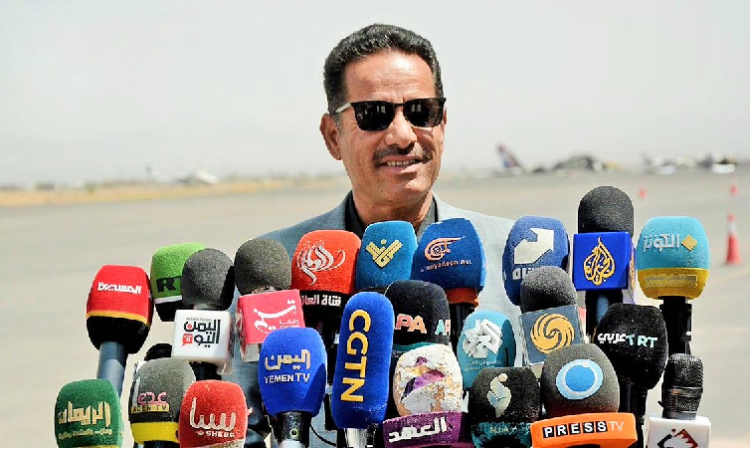
Khaled Al-Shaif, Director General of Sana’a International Airport, affirmed that the airport is fully prepared to receive commercial, humanitarian, and UN flights, despite suffering total destruction as a result of being targeted by the Zionist enemy on May 6th of last year. He emphasized that the air embargo imposed on the airport is the only obstacle to resuming civilian flights, contrary to the claims made by the aggressor parties regarding the airport’s unreadiness or the unavailability of aircraft.
Al-Shaif pointed out that the airport suffered extensive damage, including the runways, the departure terminal, and the airfield. However, its rehabilitation was completed in record time under the directives of the revolutionary leadership. The airport was declared ready just one week after it was targeted, and flights resumed with the sole civilian aircraft that survived the bombing.
He noted that flights continued from May 6th to 28th, with two daily flights to Jordan, before Hajj flights commenced. He emphasized that the continuation of UN flights to this day, including cargo planes belonging to various international organizations, is practical proof of the airport’s readiness according to international standards and requirements.
He added that technical, security, and administrative staff are working around the clock, and that the airfield lighting system was recently repaired, enabling the airport to receive flights even at night. He affirmed that there are no concerns or technical difficulties related to landing or operation.
Al-Shaif stressed that the claims made by the Saudi-led coalition and its mercenaries regarding the unreadiness of Sana’a Airport are “baseless.” He asserted that the aim of these allegations is to thwart any attempts to reopen the airport and to intimidate airlines and civil aviation organizations from operating flights to Sana’a. He emphasized that the availability of aircraft is not an obstacle, explaining that there are multiple alternatives, including purchasing or leasing new planes, or allowing other companies to operate flights through Sana’a Airport. He noted that there are already offers from airlines to operate flights to and from the airport.
He explained that the air embargo imposed on Sana’a Airport since May 2015 has prevented any commercial or humanitarian flights, including the delivery of medicine and the travel of any Yemeni citizen through the airport for an entire year. He considered this blockade to be the primary cause of the suffering of patients, humanitarian cases, pilgrims, and all the people of Yemen.
He pointed out that Sana’a Airport is preparing to receive more than 1,700 released prisoners in the coming days as part of prisoner exchange operations, confirming the airport’s full readiness to provide services for aircraft related to the prisoner exchange, as well as for any commercial flights permitted to land in Sana’a. Al-Shaif stressed the great economic feasibility of operating flights through Sana’a Airport, given the large population density in the free governorates and the high demand for travel after years of long blockade, noting that many airlines have expressed their desire to operate flights to Sana’a, but the aggression coalition is still preventing this to this moment.
He explained that the air blockade is not limited to Sana’a Airport, but also includes airports in the occupied governorates, where flights are restricted to a limited number of Yemenia Airways flights and some private companies, with continued restrictions on air traffic.
He considered the continued closure of airports and the air blockade to be “a declaration of war on the Yemeni people, aimed at suffocating, starving, and humiliating them,” stressing that this will not deter the Yemeni people from their steadfastness and resistance against the aggression.
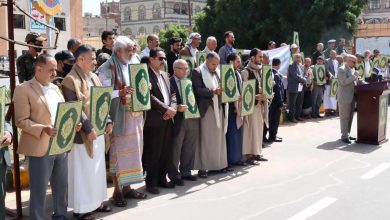
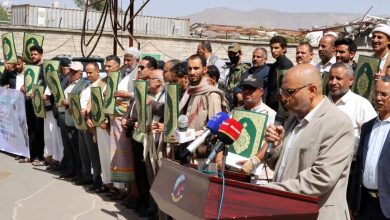
Regarding pilgrims, Al-Shaif explained that Yemeni pilgrims were prevented from traveling through Sana’a Airport from 2015 until 2022, before Hajj flights were allowed to resume following the truce agreement in April 2022. He clarified that flights only took place during the years 2023, 2024, and 2025.
He pointed out that during last year’s Hajj season, the plane carrying pilgrims was targeted, even though it was planned to transport more than 2,500 pilgrims. However, only 1,166 pilgrims were able to travel.
He added that approximately three thousand pilgrims were able to travel through Sana’a Airport during the 1444 and 1445 Hajj seasons, while Yemeni pilgrims were prevented from traveling through the airport during the 1447 Hajj season. He considered this a blatant violation of pilgrims’ rights, especially for the elderly and families opposed to the aggression who cannot travel through other ports of entry.
He described the continued closure of the airport as a “war crime that does not expire with time,” appealing to humanitarian and human rights organizations and the International Civil Aviation Organization (ICAO), accusing them of lacking seriousness and failing to address the issue of the air blockade imposed on Yemen.
Al-Shaif affirmed that the revolutionary leadership is authorized to determine the appropriate strategic options for reopening the airport and ending the blockade, whether through negotiations or other means. He noted that the leadership has managed this issue wisely, extricating the country from numerous conspiracies and achieving victories on various fronts.
The Director General of Sana’a International Airport noted that the relevant authorities have been documenting all crimes related to the closure of Sana’a Airport and the continuation of the blockade, stressing that legal files have been prepared and will be submitted in due course, and that the aggression coalition will bear full responsibility for all victims and losses resulting from the airport’s closure and the prevention of humanitarian and commercial flights.